Tulsi plant care
Ocimum tenuiflorum, also called holy basil · Updated
Tulsi wants lots of sun, soil that drains fast, and water when the top of the soil is dry. Most tulsi plants die from overwatering in the monsoon or cold in a north Indian winter, not from neglect.
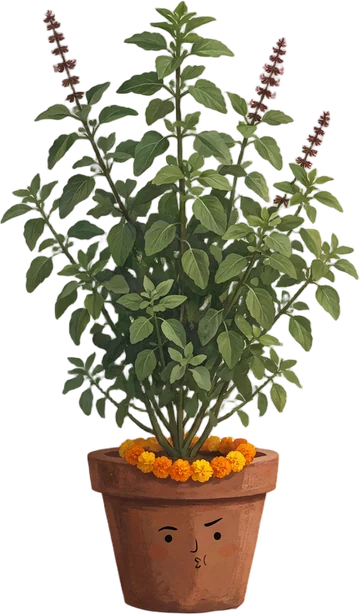
Tulsi · Sanskari aunty
“Beta, pooja ke baad paani dena tha. Par nahi… Sharma ji ke bete ki reel zyada zaroori thi.”
You were meant to water me after pooja. But no… Sharma ji's son's reel mattered more.
Tulsi care at a glance
| Sunlight | Full sun: 6 or more hours of direct light a day |
|---|---|
| Water | When the top 2–3 cm of soil is dry |
| Summer | Often daily in a sunny pot |
| Monsoon | Only when the soil has dried; keep out of waterlogging |
| Winter | Every 3–5 days; protect from cold below about 10°C |
| Soil | Garden soil, compost and sand or cocopeat, fast draining |
| Pot | At least 25 cm (10 inch) across, with a drainage hole |
These are starting points. Pot size, soil, sun and your city's weather change everything, so check the soil before you water.
How often to water tulsi
Push a finger into the soil. If the top 2–3 cm is dry, water slowly until it runs out of the drainage hole. If it's still damp, wait.
In a hot, sunny Indian summer that usually means every day for a tulsi in a pot. In the monsoon it can go several days without water. In winter, every three to five days is typical. Never leave the pot standing in water: tulsi roots rot quickly.
Sunlight
Tulsi is a sun plant. Give it the sunniest spot you have: a balcony, terrace or window with at least six hours of direct sun. Indoors, away from a window, it gets leggy, pale and weak.
Pinch the flowers (manjari)
When tulsi flowers, the plant puts its energy into seeds and the leaves thin out. Pinch off the flower spikes as they appear and pinch the tips of branches now and then. The plant turns bushier and lives longer.
Tulsi in winter
Tulsi is a tropical plant and dislikes cold. In north India, move it next to a sunny wall, away from cold wind, and bring it in or cover it on nights below about 10°C. Water less. Some leaf drop in winter is normal; new growth comes back in spring.
Common problems
- Yellow leaves: usually too much water or poor drainage. Let the soil dry out more between waterings.
- Black or brown spots: often fungal, common in the monsoon. Remove the spotted leaves, water the soil and not the leaves, and give it more air.
- Drooping in the afternoon: thirsty, or the pot is too small. Water in the evening and repot if roots fill the pot.
- Tiny insects under leaves: aphids or whitefly. Wash them off with water, then spray diluted neem oil in the evening.
Watering through the Indian seasons
Summer, monsoon and winter need very different watering. Read the seasonal watering guide for what changes and when.
Tulsi care questions
How often should I water tulsi in summer?
In a sunny pot in Indian summer, usually every day, in the morning or evening. Always check that the top 2–3 cm of soil is dry first.
Why is my tulsi plant drying in winter?
Cold. Tulsi suffers below about 10°C. Move it to a warm, sunny, sheltered spot, water less often, and cut away dead stems once new growth starts in spring.
Can tulsi grow indoors?
Only next to a very sunny window. Without at least a few hours of direct sun it grows weak and leggy.
Should I remove tulsi flowers?
Yes, if you want more leaves. Pinching off the flower spikes keeps the plant bushy and stops it from going to seed.
More plant care guides
- Money plant careThe money plant most Indian homes grow is pothos.
- Cactus care at homeCactus needs very bright light and very little water.
- Monstera careMonstera wants bright, indirect light, a chunky soil that drains well, and water when the top few centimetres are dry.
- Rose plant care in potsRoses in pots need at least six hours of direct sun, a big pot, regular deep watering and food.